20 Best Facts For Choosing Termite Control Services In Jakarta
Wiki Article
Jakarta Homes: Subterranean Termite Defense
Walk through any Jakarta neighborhood--Menteng, Kebayoran Baru, Kelapa Gading--and you will see them: door frames swollen at the base, fine brown lines climbing foundation walls, tiny pinprick holes in skirting boards. Many homeowners believe that this is simply wear and tear. This is not the case. This is evidence that a subterranean colony termites has already occupied the building and is eating all day long and 7 days a week. The constant humidity in Jakarta and the unintentional enticement from modern construction methods are the main reasons. To protect the security of a Jakarta home, you need to abandon any pest control techniques imported from abroad and use strategies that are specifically designed for the local nature, soil and climate.
1. The Door and Window Frames Epidemic
Jakarta termites aren't able to burst into concrete slabs. They enter buildings in the area where bricks meet wood at a level that is accessible to humans. About half of all documented infestations are caused by wooden frames in brick doors and walls. The wrong fight is being waged by anti-termite service providers who come to your residence with injection rods and drills that are pointed at the floor slab. The real battlefield lies at waist level. The moisture condenses on the glass and seeps onto the untreated wood.
2. Four Species, One City, Different Rules
There are at least four subterranean species of termites live in Jakarta, and their behavior isn't similar. Coptotermes Gestroi is a ferocious structural invader. Microtermes nsperatus is the most dominant species, however it is less destructive. Macrotermes gilvus builds visible mounds in gardens. Coptotermes curlvignathus would prefer live trees to migrate into houses but when wood runs out. Pest control professionals who are unable to tell the difference between them will not be able to pick the appropriate bait.
3. The Six-Week Truth
No colony is eliminated in a single night. The chlorfluazuron-based baits need up to six weeks to travel throughout the colony via trophallaxis, the sharing of food from mouth to mouth that is the basis of termite communities. Pest control companies that promise 24-hour removal are selling poisons that kill foragers but keep the reproductive nucleus underground untouched.
4. Above-Ground Stations Change Everything
Perimeter stations are good for monitoring, but they aren't effective against active infestations inside the structure. Above-ground stations - small bait cartridges that are locked directly onto mud tubes--force toxicant into the colony's highway. Jakarta exterminators aren't selling treatment if they don't have above-ground units.
5. The Soil Moisture Trap
The silty clay soils of Jakarta hold water. Termites do not just tolerate of conditions that are higher than 22 percent soil water content, they actively seek it out. If anti-termite firms inject chemicals into soil without first checking the drainage, downspout discharge or the overspray of irrigation the soil, they are putting poisonous chemicals to a environment that termites love.
6. Pine Stake Forensics
Before they can recommend the treatment, the exterminators of Jakarta will put down stakes from Pinus-merkusii in the surrounding area. After 30 days, the exterminators dig up the stakes, and weigh them. A weight loss of more than 30 percent suggests high foraging, and calls for intervention. This is not guesswork; it's calibrated entomology that is available to any professional service provider.
7. Green Belt Hazard
Nine Jakarta sub-districts carry extreme termite risk: Penjaringan, Pademangan, Palmerah, Kebayoran Baru, Jagakarsa, Pesanggrahan, Kramatjati, Duren Sawit, and Cipayung. These areas share one characteristic--significant remaining green space that sustains parent colonies. In these zones homes must be monitored regularly and baited on a regular basis. Annual contracts aren't enough.
8. The new construction is not Safe
Termites are a part of urban development. They build nests in soil that is imported to construct new housing estates. They graze in drainage ditches, and they colonize the landscapes which developers construct. A newly constructed house in BSD is no blank slate. Infestation by termites began in the home the minute the first plant was planted.
9. The Teak with a Short-Rotation is Not the Teak of your Grandfather.
Traditional Javanese teak, which is harvested at the age of sixty years is a rich source of oils and silica that repel termites. Modern teak from plantation harvesting that is just 15 years old, however, does. A lot of "teaks", used in Jakarta's present housing, are chemically immature and botanically the same. When homeowners pay premiums for timber resistant to termites, they often receive termite-resistant wood.
10. The Mud Tube Forensics Rule
Don't scrape the dirt tube without first examining what it has revealed. The point of origin for the tube indicates the soil entry zone. The tube's diameter corresponds to the colony's age. The location of your colony (bathrooms and kitchens as well as exterior walls) can indicate the moisture source that is sustaining it. This is similar to deleting security footage before watching it if you destroy the tube without reading the guidelines.
The final sentence of the article is:
Jakarta is not under threat. Residents have taken up residence in their homes, and have adapted to Jakarta's particular circumstances. The species are known. The patterns of attack are identified. The timelines for treatment are measured. The only thing to determine is whether homeowners and those providing termite prevention services reject common myths and instead follow the protocols Jakarta's subterranean pests forced researchers to validate. There is scientific evidence. It's up to you whether or not to use it. Read the most popular jasa pembasmi rayap for website advice including rumah rayap, jasa pembasmi rayap, jasa anti rayap tangerang, anti rayap, jasa basmi hama, anti hama, jasa rayap, jasa pembasmi rayap, anti rayap, kayu yg tidak dimakan rayap and more.
Greater Jakarta Soil Treatment Protocols To Treat Termites
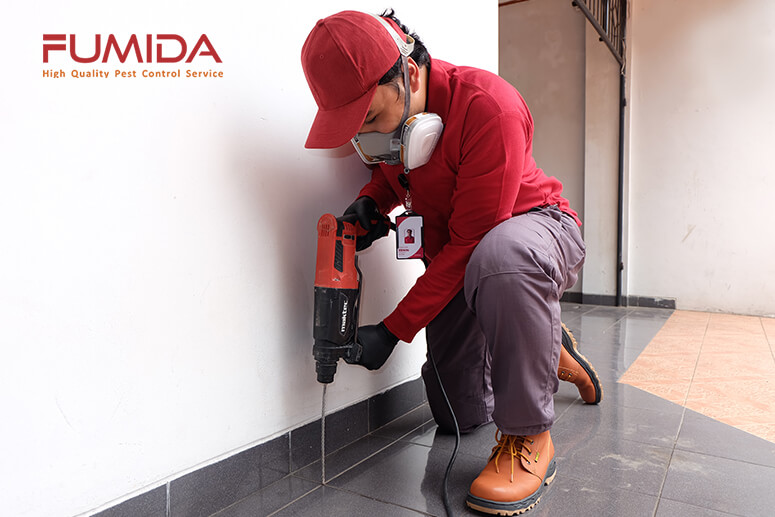
The trenches are dug. The rod is then put in. The chemical inject is done. The technician walks 60 centimeters before repeating. The routine is repeated tens or thousands of times per year throughout Greater Jakarta. Both homeowners and exterminators believe it is a tried-and-tested technology. It's not. It's not. In the temperate climates, the soil treatment for subterranean species started with a variety of soil types and moisture regimes or species of interest. Trench-and-drench, applied to Jakarta's silty clay, and Coptotermesgestroi's behavior of foraging, results from temporary suppression up to complete futility. Greater Jakarta must have soil treatment protocols that are calibrated to the conditions of Greater Jakarta. These ten points separate chemical treatment that simply generates invoice lines from treatments which actually does not exclude termites.
1. The soil texture determines chemical Mobility
Jakarta's soils are dominated by compacted silty Clay. The size of the particles is very tiny. Organic content is low. Porosity is minimal. This substrate does not allow liquid termiticides to disperse in a radial manner, as do loamy soils. Instead, they accumulate in trenches, where they move in particular paths, such as cracks, utility channels as well as root canals. Exterminators are fooling themselves if they assume a uniform distribution. There is no need for faith post-application soil core samples.
2. The 300 to 500mm Moisture Belt Determines Placement
The roof eaves offer protection to the soil directly adjacent to the wall. It receives minimal rainfall. It's still drier than open soil. Termites hunt in the region of 300 to 500 mm from the building. They are close enough to the foundation but far enough to avoid water. The belt is not noticed by the soil treatments that are that are applied in a flush with the wall. Effective protocols place the trench on the drip line and not at the foundation line.
3. The Half Life of Hydrolysis is measured in Weeks, Not Months.
Hydrolysis breaks down fipronil, imidacloprid and bifenthrin. The rate at which hydrolysis occurs grows with temperature and humidity. The shallow depth soil temperature in Jakarta ranges between 28 and 32degC. In the majority of the dry season the soil moisture levels are more than 20%. In this case, the half-life of chemical products will be reduced. Bekasi is approximately four-months away from Ohio in which a product with a twelve-month declared efficacy is still in efficacy. This must be reflected in the warranty. Most do not.
4. Vertical Barriers Require Horizontal Disruption
Termites invade the soil and foundation interface. The treatment of soil creates a vertical chemical barrier only in the event that the chemical is present in the area of contact. Rod injection from the surface deposits chemicals in the depths, but leaves the uppermost 5-10 centimeters untreated until the rod is pulled back slowly during injection, treating all of the column. The topsoil cannot be protected by exterminators using rods which are pushed down to the depths required and then pulled away.
5. C-Organic Content Binds and Deactivates
Organic soil material absorbs repellent termiticides, thereby reducing their amount of termites that they absorb. The city soils of Jakarta contain little organic carbon. But landscape planting beds close to foundations are able to absorb plenty of compost and potting mixes. In these areas, soil treatment requires higher rates of application to break the organic binding. The standard label assumes unaltered mineral soil.
6. Pre-treatment Moisture Audits Are Non-Negotiable
A soil water content greater than 22% may make a preferred habitat. Soil moisture below 10% could hinder foraging and decrease chemical pickup. The person who does not measure soil moisture before injecting terminicides is applying chemicals under unknowing conditions. The moisture-meter cost 200 thousand dollars. The first retreatment due to inadequate conditions for application costs more than ten times the amount.
7. Linear meter must not be used for calculating trench volume.
Indonesian soil treatment quotations are generally quoted per linear meters. Label instructions specify volume and concentration per square meter or per square meter, at specific dimensions. Exterminators who quote per meter before making sure they have verified the width and depth of trenches actually sell documents of compliance rather than treating. The amount of chemicals required for 15cmx15cm trenches is lower than the amount required for 30cmx30cm trenches. The price differential is rarely reflective of the fact that.
8. Rodding Versus Trenching: A Specification-Specific Selection
Coptotermes Gestroi feeds in the top 15-20cm of soil. Microtermes insperatus gets access to moisture when it is dry via vertical shafts. Rod injection deposits chemical at depth, intercepting Microtermes. Chemical deposits are mixed and trench across the upper profiles, interception of Coptotermes. Species identification must precede protocol selection. The diversity of species found in Jakarta is not matched by exterminators that use the exact soil treatment strategies on every account.
9. Re-treatment Intervals Are Shorter Than Marketing Claims
The Indonesian pest control market is competitive. To boost sales, the warranty period is now extended. It is common to provide soil treatments with a guarantee of three years. The soil conditions in Jakarta allow for a twelve- to eighteen-month exclusion. This is followed by an increasing depletion of chemicals as well as edge penetration. The homeowners who are experiencing termites in their houses by month 22 are not unusual; they're following the plan. Pest control companies that accept warranty claims without questioning the coverage after month twenty keep clients. Pesticides who challenge coverage lose customers.
10. Post-treatment soil sampling is the only quality assurance that can be verified
The exterminator claims the trench was dug to correct depth and the chemical was mixed in the an appropriate concentration, the injection was performed at correct pressure and distribution was uniform. The homeowner is unable to confirm. Verification is done by analyzing soil cores to find active components. This is a service that exists. It's inexpensive. Jakarta antitermite services that require soil sampling from third-party companies and share the results with clients distinguish their services based on evidence. Services that refuse to conduct soil sampling differ in their faith. Evidence is becoming more important for the market.
We also have a conclusion.
Because they are familiar and accepted, soil treatment methods in Greater Jakarta continue to be employed. The mere fact that they are familiar does not assure the effectiveness of a treatment. To get the same chemical distribution, the silty-compressed clay of the city requires a bigger trench than loamy soils. Due to its monsoon-like climate and the timeframes for hydrolysis are shortened. This requires shorter warranty periods and regular retreatment cycles. Its species assemblage demands protocol differentiation based on pretreatment identification. Landscape planting beds require organic carbon adjustments and greater rates of application. The foundation geometries of the company demand that trenches be placed near the dripline, not in the wall. Jakarta anti termite treatments that continue to perform soil treatment in accordance with the labels of companies that were designed for Ohio Texas Osaka guarantee suboptimal outcome. The manufacturers cannot be held responsible for suboptimal results. Instead, the exterminator must take responsibility if he does not adapt the method to meet the local climate. A significant investment in core samplers and soil moisture meters is necessary to adjust. Laboratory relationships for analytical analysis are also needed, as well as technician training in species recognition. These investments should not be overlooked in a mature market. This is the entry cost that must be considered seriously. Homeowners in Greater Jakarta are able to differentiate between exterminators who have paid for entry fees and those who aren't. This is evident by homeowners who take higher prices from the first, and refuse lower ones from the other. Follow the top rated anti rayap jakarta for website info including pengendalian hama, kayu tahan rayap, anti rayap untuk kayu, cara basmi rayap, harga anti rayap, pembasmi hama, rayap lemari, pembasmi rayap, bahan lemari anti rayap, lemari anti rayap and more.
